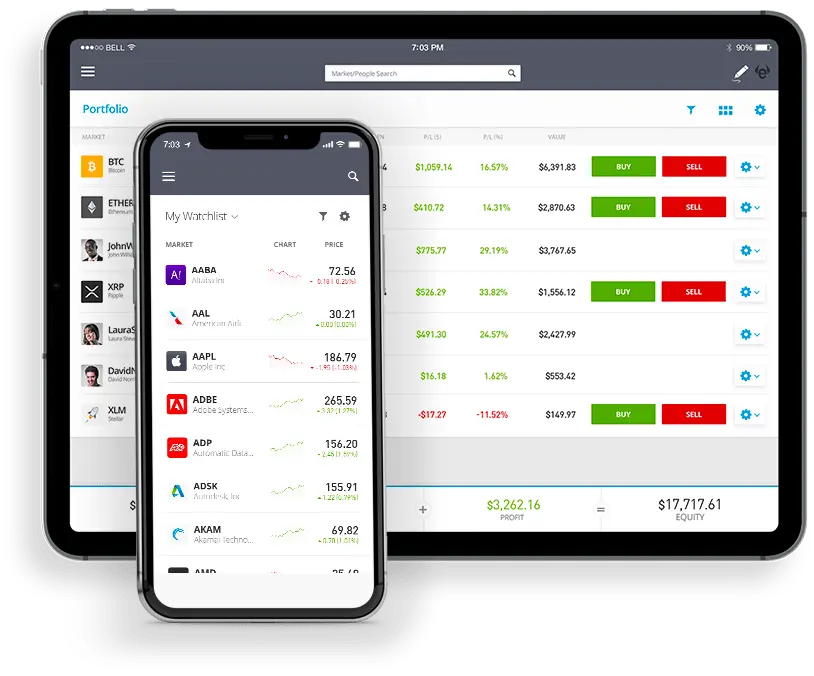
When you trade CFDs (Contracts for Difference) on eToro, you’ve got two core strategies at your disposal: going long or going short. Going long means you’re betting the asset will rise. Going short indicates that you’re taking the opposite side and expecting it to fall.
Going Long
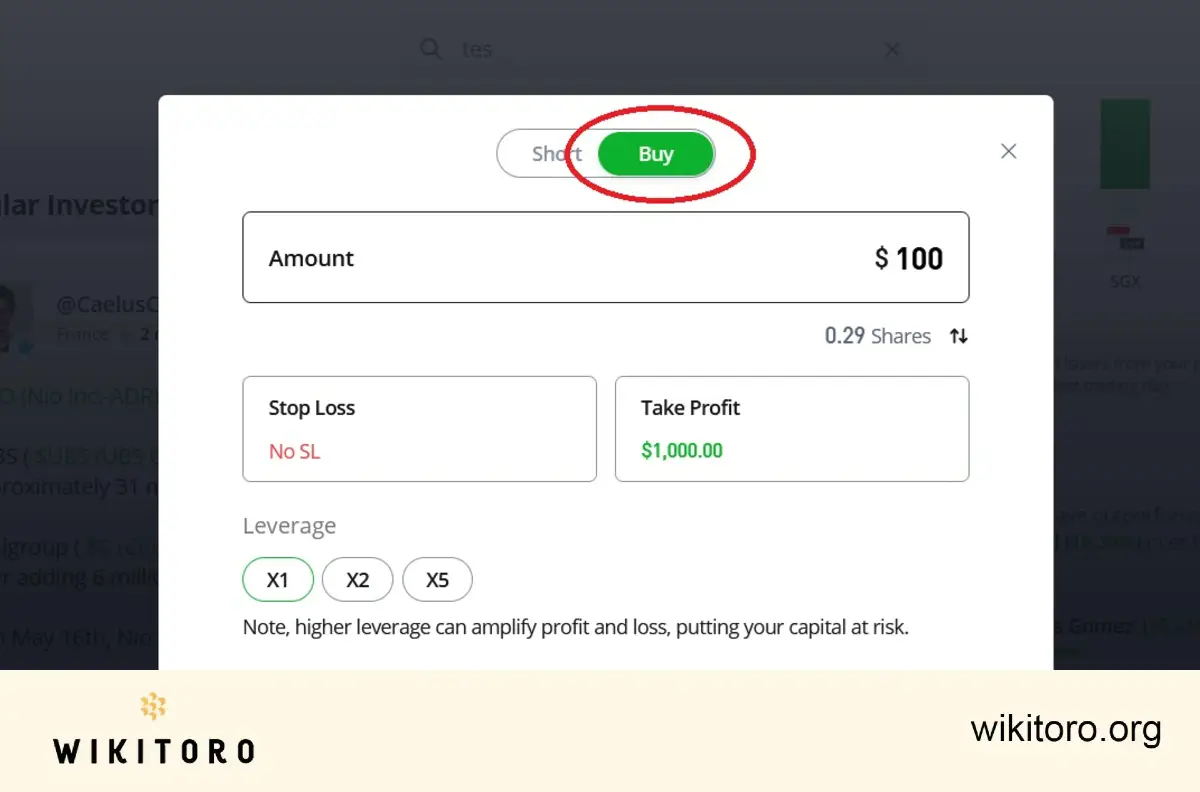
Going long is the traditional move. You expect the asset’s price to rise, so you open a Buy position. If you’re right, and the price goes up, you sell at a higher price and take the profit.
Going long with CFDs on eToro
Going Short
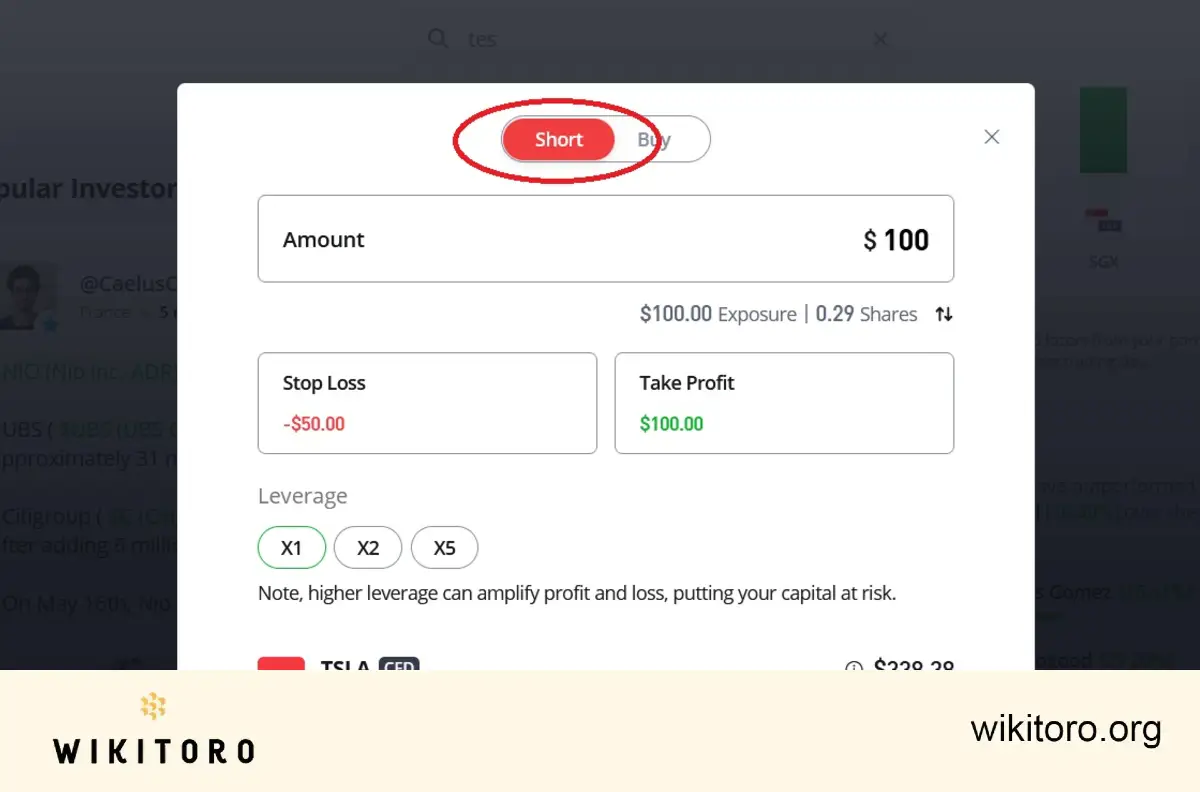
Going short is how traders profit from a price drop. You open a Sell position and aiming to buy back at a lower price.
If the asset tumbles, you pocket the difference.
Going short with CFDs on eToro
Differences between going long and going short on eToro
Aspect
Going Long
Going Short
Market Expectation
Price of asset will rise
Price of asset will fall
Position Type
Buy
Sell
Profit Scenario
Price of asset increases
Price of asset decreases
Risk Scenario
Price of asset decreases
Price of asset increases
Opening Price
Buy (ask) price
Sell (bid) price
Closing Price
Sell (bid) price
Buy (ask) price
Leverage
Available; amplifies gains/losses
Available; amplifies gains/losses
Overnight Fees
May incur interest charges
May incur fees or receive interest
Whether you go long or short, make sure that it's matched with your market view and risk appetite. Learn the mechanics and keep an eye on fees. When I was just starting out, I used to do test trades with a demo account. After I learned the basics and gained confidence, then I started with live trading.
Mike Druttman, Head of Content at Wikitoro.org, has decades of expertise in marketing communications and business matching. Educated at the CAM Foundation and the Chartered Institute of Marketing, Mik...
We use cookies in order to improve the website's performance and enhance your user experience. You may choose your preference to this use of cookies. For more information please refer to our Privacy Policy