When Does eToro Charge Fees?
- No deposit fees
- No account management fees
- No fees to open an account
- Commission-free for real stocks and ETF trading
- Transparent fee structure
52% of retail CFD accounts lose money.
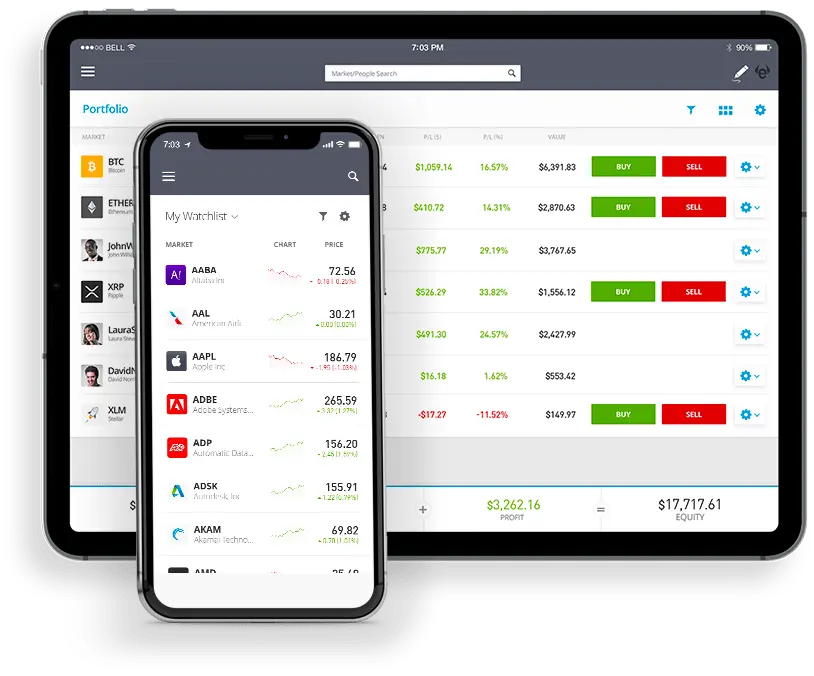
eToro charges fees at specific times and under certain conditions, depending on what you’re trading and how you’re using the platform. It’s not a flat setup. Each asset type and action comes with its own rules.
Let’s walk through exactly when those charges hit your account:
Holding a leveraged or short CFD position? You’ll pay an overnight fee for that privilege.
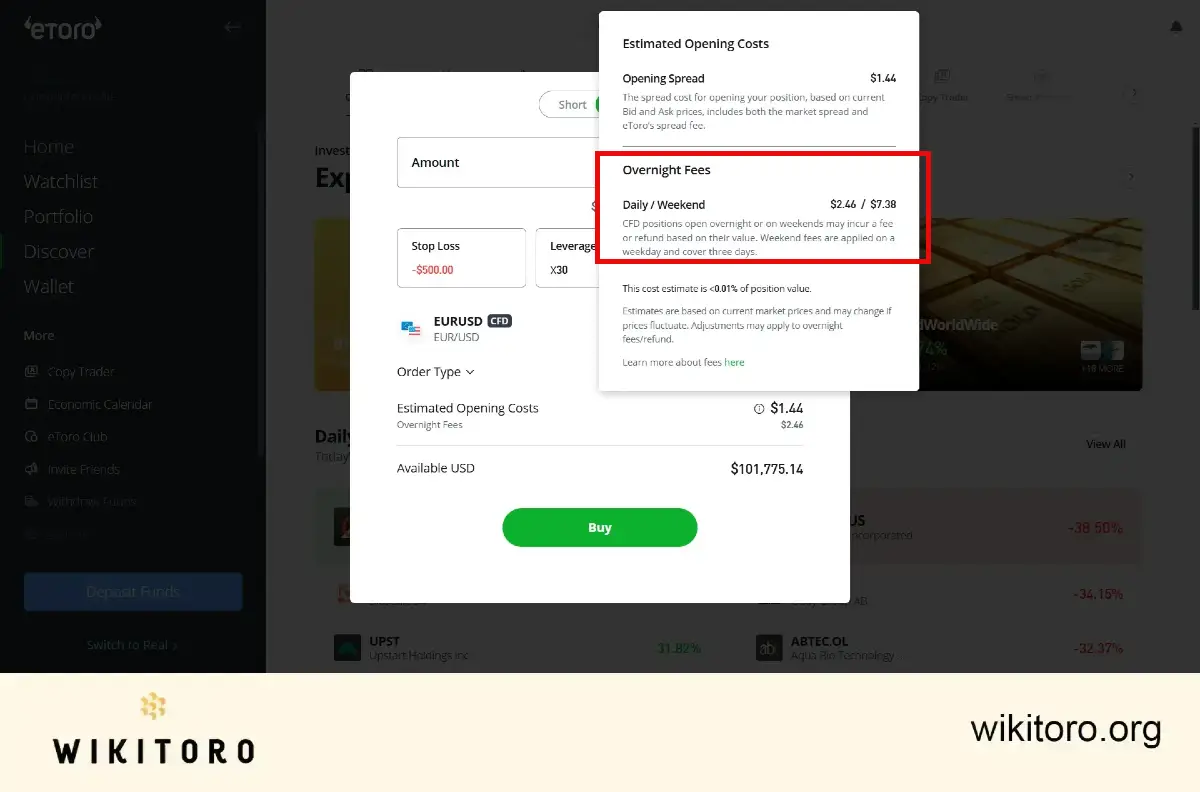
When it’s charged: Every weekday at 21:00 GMT (22:00 during Daylight Saving Time), Monday to Friday.
Weekend multiplier: To cover the weekend, eToro applies a triple fee once a week—on different days for different assets:
Trading Bitcoin, Ethereum, or anything else under the crypto banner? This will incur a fee.
What it costs: 1% fee when you buy or sell.
Where it shows up: It’s baked right into the price you see when opening or closing a trade. No surprises but just part of the deal.
Stocks and ETFs are mostly commission-free on eToro. Mostly.
Zero commission: Free trading in specific regions but not everywhere:
If you’re in Australia, Denmark, Finland, the Netherlands, Norway, Portugal, Spain, or Sweden:
Go dark for too long and eToro charges you for it.
How much: $10/month after 12 months of no activity.
How to avoid it: Just log in. Seriously. That alone resets the inactivity timer.
Pulling money out or depositing in a non-USD currency? Here’s what to expect:
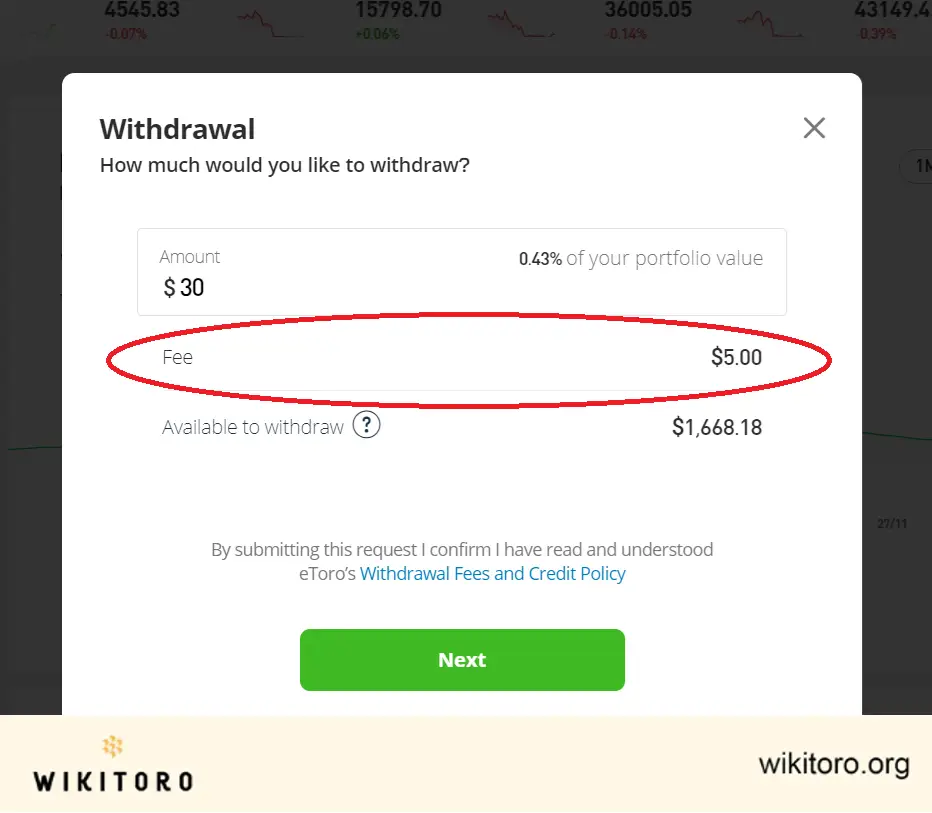
Get a handle on these fees and I do believe that you’ll be able manage your eToro investments a lot more efficiently. Just pay close attention to when and how you trade. This could save you from racking up costs you didn’t plan for.
 About Mike Druttman