Yes, you can trade futures on eToro. In fact, it offers both exchange-traded futures (ETFs) contracts and CFDs (Contracts for Difference) that reflect futures pricing. That means you can tap into global futures markets (commodities, indices, currencies) without the need to have a trading account with a traditional broker.
Types of Futures You Can Trade on eToro
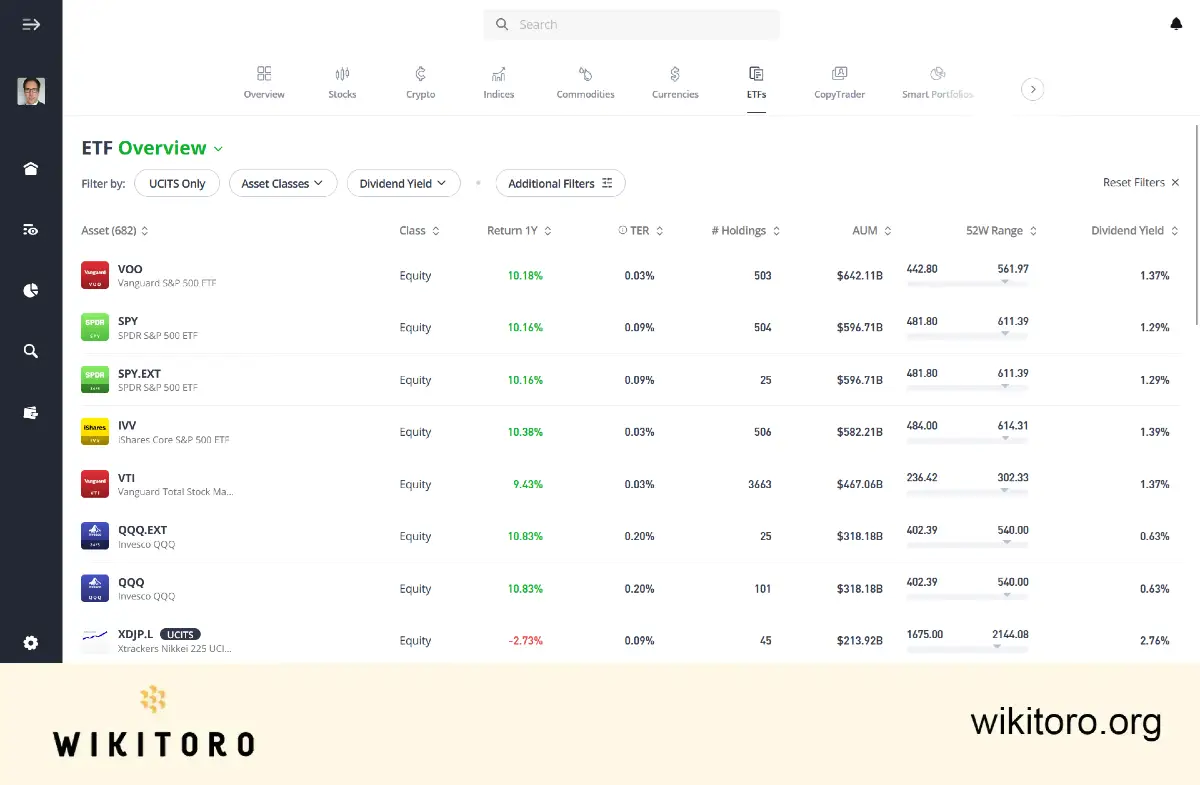
Exchange-Traded Futures
These are standardized contracts listed on regulated exchanges like the Chicago Mercantile Exchange (CME). Think Micro E-mini S&P 500 (MES), Micro E-mini Nasdaq 100 (MNQ), and even 1-Ounce Gold futures, all accessible through the platform.
Tradable ETFs on eToro's platform
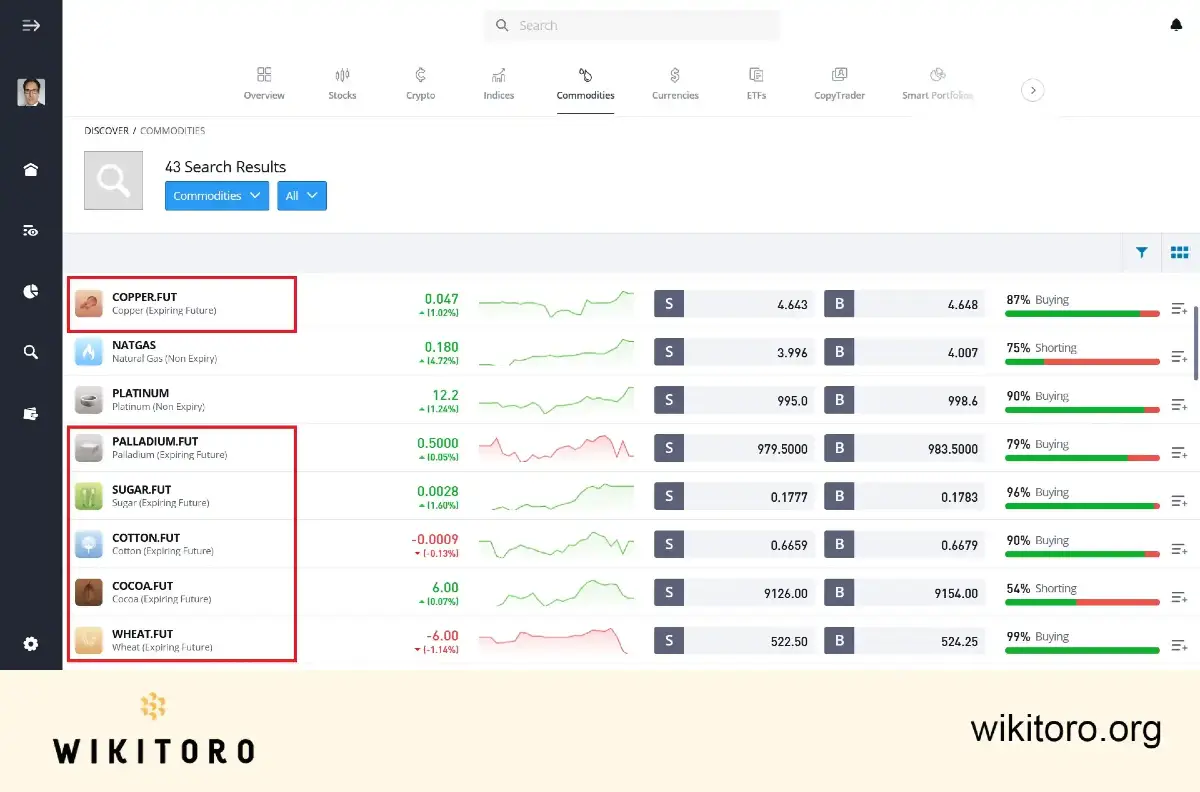
CFD Futures
Prefer something a little more flexible? eToro also offers futures-based CFDs. These mimic futures pricing but without the expiry dates or physical delivery headaches. Just pure price speculation, but simplified.
Tradable CFD futures on eToro's platform
Why I Prefer eToro’s Futures Setup
Leverage: Futures on eToro are leveraged, so I can control big positions with less upfront capital. Just bear in mind: leverage cuts both ways. More gain potential, but more risk too.
Cash Settlement: I don’t need to worry about taking delivery of barrels of oil or bushels of wheat. Most futures here are cash-settled, which keeps things tidy and digital.
Trading Hours: Futures trading on eToro runs pretty much around the clock (23 hours a day, five days a week) to mirror global market schedules. No need to time the trades to local exchange hours.
Fees: Right now, eToro charges a flat $3–$5 per trade during its beta launch for futures. No overnight fees, no hidden charges. For me, this straightforward and more cost-efficient.
How to Get Started with Futures on eToro
Pick Your Market: Log in to your account, then go to the asset you want. Futures CFDs are labeled clearly. Just look for the “Futures” tag across categories like commodities, indices, or ETFs.
Analyze Before You Trade: Use eToro’s tools: live price charts, sentiment indicators, and news updates to size up the market.
Place a Trade: Click “Trade” to open a position. Enter your amount, then apply any risk controls like stop-loss or take-profit settings before you confirm.
Before you start, here’s a word of advice: futures trading isn’t for everyone. It’s fast-moving, high-stakes, and leveraged, so things can go south just as quickly as they go up. If you're a newbie, I strongly recommend that you use eToro’s demo account first. Get a feel for how futures move before investing real cash.
Nadav is the Senior Content Editor at Wikitoro.org with over 15 years in online marketing. A graduate of Toronto Metropolitan University, he has strategized for More Sales Inc. and led online sales at...
We use cookies in order to improve the website's performance and enhance your user experience. You may choose your preference to this use of cookies. For more information please refer to our Privacy Policy
 About Nadav Zelver